
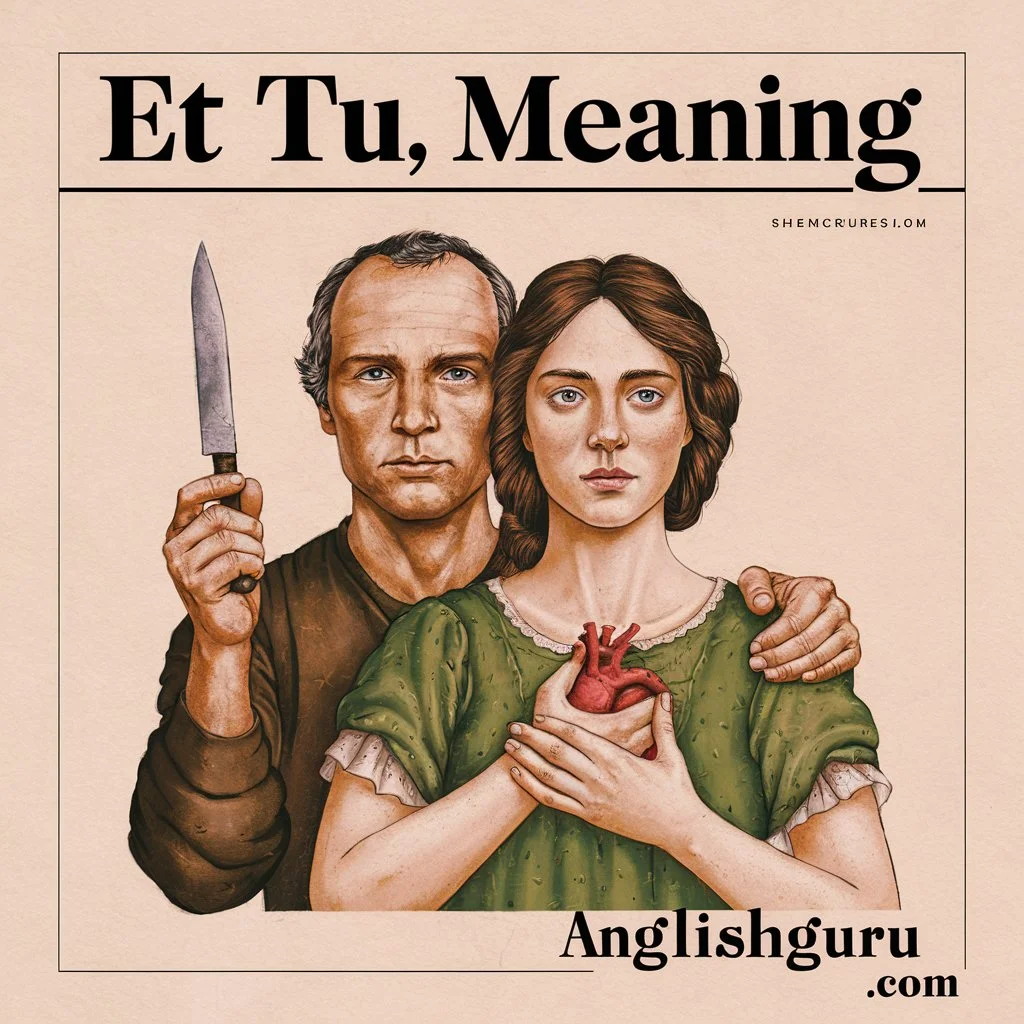
The phrase “Et tu” has intrigued readers, writers, historians, and everyday conversationalists for centuries because of its deep emotional intensity and dramatic effect. Originating from classical Latin, this short expression has evolved into a powerful way to communicate betrayal, shock, disappointment, or sudden emotional impact in English. Its cultural influence grew largely through Shakespeare’s Julius Caesar, where the line “Et tu, Brute?” became a timeless symbol of being hurt by someone trusted and continues shaping the overall Et tu meaning we recognize today.
Today, the phrase appears in literature, films, memes, and even casual dialogues, giving ordinary conversations a touch of drama or irony. It also plays a unique role in texting, where people use it to express disbelief or frustration concisely and dramatically—further reinforcing the modern Et tu meaning across everyday communication.
Origin of “Et Tu”
The full phrase is famously “Et tu, Brute?” and is attributed to William Shakespeare’s Julius Caesar. In Act III, Scene I, Julius Caesar utters these iconic words when he realizes his close friend Brutus is among the conspirators taking his life.
The literal meaning of the phrase is “And you, Brutus?” or “You too, Brutus?”, but its emotional weight is far deeper. It expresses overwhelming feelings of shock, betrayal, disbelief, and deep personal hurt, especially when the betrayal comes from someone trusted.
Although Shakespeare immortalized the line, variations of it existed in classical Latin literature, where similar expressions were used to emphasize the tragedy of being betrayed by a friend or ally. Over time, this brief phrase became a powerful symbol of ultimate betrayal in Western culture. Today, “Et tu?” is still used to highlight unexpected disloyalty—whether in serious discussions, dramatic writing, or even lighthearted conversations that mimic the emotional intensity of the original moment.
Modern Meaning of “Et Tu”
Today, et tu is often used figuratively to express betrayal or unexpected treachery, sometimes humorously in informal conversations:
- Serious tone: Feeling hurt or shocked when someone you trusted betrays you.
- Humorous tone: Lighthearted sarcasm when a friend sides against you in trivial matters.
Example in conversation:
- “You didn’t save me a slice of pizza? Et tu, my friend?”
How “Et Tu” is Used in Texting
Texting often requires concise expressions. Using ‘et tu’ can convey betrayal, surprise, or sarcasm in just two words, making it perfect for digital communication.
11 Texting Examples
- A friend took the last cookie:
“Et tu, Emma? I was saving that for lunch!” - Colleague skips your idea in a meeting chat:
“Et tu, Tom? I thought we were on the same team!” - Sibling eats your dessert:
“Et tu, little bro? That was mine!” - Group chat teasing:
“Et tu, Jane? I can’t believe you joined them!” - Funny sarcasm:
“Et toi, Netflix? Canceling my favorite show again?” - Betrayal by a partner in casual conversation:
“Et tu, darling? You didn’t tell me about the surprise party!” - Sports context:
“Et tu, Mark? Passing the ball to the other team?” - Friend shares secret:
“Et tu, Lisa? I trusted you!” - Workplace joke:
“Et tu, boss? Assigning me extra work again?” - Group project humor:
“Et tu, group? Forgetting to mention the deadline?” - Online gaming:
“Et tu, teammate? Leaving me to fight the boss alone!”
Alternatives to “Et Tu” Based on Tone
1. Casual Alternatives
- “You too?” – Direct and conversational
- “Seriously?” – Expresses mild shock or disbelief
- “Oh, come on!” – Playful frustration
2. Polite Alternatives
- “I didn’t expect that from you.” – Calm, neutral disappointment
- “That was surprising.” – Less emotional, suitable for professional settings
3. Dramatic / Literary Alternatives
- “Even you?” – Closely mirrors the original tone
- “Betrayed by the one I trusted most.” – Emphasizes emotional impact
4. Humorous Alternatives
- “Traitor!” – Exaggerated joking tone
- “Backstabber!” – Lighthearted exaggeration among friends
Choosing the Best Alternative
When selecting an alternative to et tu, consider:
- Tone: Are you joking, frustrated, or seriously hurt?
- Context: Casual chat, workplace, social media, or literary discussion.
- Audience: Close friends vs. professional colleagues.
Example:
- Casual: “Et tu, bestie? You skipped my party?”
- Professional: “I didn’t anticipate that decision from your side.”
Why “Et Tu” Remains Popular
- Concise and expressive: Only two words, yet it conveys deep emotion.
- Cultural reference: Instantly recognizable due to Shakespeare and pop culture.
- Versatile: Works in humor, serious betrayal, or dramatic effect.
Using “Et Tu” in Everyday Conversations
Even if you’re not writing Shakespearean dialogue, et you can spice up modern interactions. Here’s how:
- In texting: Short, playful, or sarcastic reactions.
- In emails: Rarely formal, but might work for creative writing or internal jokes.
- In speech: Adds literary flair or humorous exaggeration.
Example:
- Text to a friend: “Et tu, Paul? Joining the other team without telling me?”
- Casual conversation: “Et tu, Jenny? After all we’ve planned!”
Common Misconceptions About “Et Tu”
- Only for betrayal: It’s often used humorously now.
- Strictly literary: Many people use it casually in texts and memes.
- Must be followed by a name: Not necessary; et tu alone conveys the idea.
Cultural References
- Movies, TV shows, and memes often use et tu to dramatize betrayal.
- Social media memes: Et tu, autocorrect? – Joking about technology “betraying” you.
- Pop culture: From Marvel movies to sitcoms, it’s widely recognized.
Tips for Texting with “Et Tu”
- Add context – Who or what is the “betrayer”?
- Use humor when appropriate – Keeps the tone light.
- Emojis help – 😲😅 can emphasize sarcasm or surprise.
- Avoid overuse – Its impact diminishes if used too often.
Example:
- “Et tu, Emma? 😅 I can’t believe you joined their team!”
Final Thoughts
In the end, “et tu” remains a timeless expression because it carries emotional weight in just two short words, which is why the Et tu meaning continues to resonate across generations. Whether you use it to show genuine disappointment, playful sarcasm, or dramatic surprise, the phrase fits naturally into modern texting, conversations, and online reactions. Understanding its background, history, and the full Et tu meaning ensures you can communicate with clarity, confidence, and the perfect touch of expression in any situation.